 Contact
  Log In


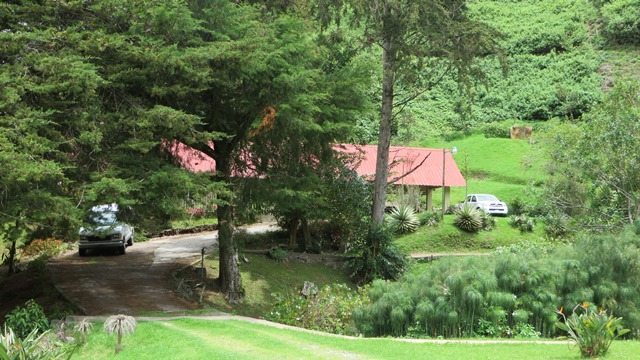
I recommend renting for at least six to twelve months before you consider buying. This gives you time to make sure you like living in Panama and that you like the area you think you want to live in. A year will give you time to learn the market and know the “right” price to pay.
I’ve been a real estate investor since 1992 and have bought and sold hundreds of properties, so I know real estate. I’ve also bought and sold real estate in Panama. In Panama, the whole process of buying and selling is completely different.
Most foreigners selling real estate in Panama do not have a work permit, let alone a license. Just because a foreigner has a license to sell real estate in Panama does not mean they are trustworthy. Foreigners who sell real estate without a license are considered “consultants” or associates. A foreigner cannot be a “licensed” real estate agent until they have been working with a broker for several years and then take a test, in Spanish, to get a license. Most foreigners who sell real estate are not licensed real estate agents.
WHO CAN YOU TRUST?
There are many trustworthy Panamanian real estate agents. By the way, Panamanians do not need a work permit to work in Panama. Only foreigners need a work permit.
Most expat real estate agents or salespeople have absolutely no previous experience with real estate. Yet, they want to help you make the most expensive investment of your life so they can make a commission. Buyer beware!
In many ways, Panama is like the wild wild west regarding real estate.
Neither the Panamanians nor the foreigners who sell real estate or help you buy/lease real estate are obligated to fiduciary responsibility in Panama. Fiduciary responsibility means that they will put your interest above their own. It’s not required in Panama though some honest real estate agents/consultants do put your interest first and foremost. Others will say and do anything to get the sale and their commission. You would not believe the stories I’ve heard!
Some agents, but certainly not all, will put their commission above your best interest. That’s why it is important always to have your OWN attorney do a title search and create the purchase contract. Your attorney can also advise you on what is needed to buy real estate in Panama successfully. Unfortunately, many real estate salespeople will not tell you that:
- You should always get the property inspected
- You should get the septic and water systems inspected
- You should verify that there is a Certificate of Occupancy filed
- You should verify that all taxes have been paid (even if in a corporation)
- Be aware of the pros, cons, and dangers of Right of Possession property
- 3% capital gains tax (on full sales price) even if a corporation
- 2% transfer tax (on full sales price) even if a corporation
- Review the survey to verify what you are buying or get a new one
- If there is a tax exemption, it needs to be transferred to you
- The best way to take title for your situation
Your attorney will ensure your interest is protected before any contracts are signed, money changes hands, or title is transferred. Most likely, all contracts and other documents will be in Spanish. Unless you are fluent in Spanish it is especially important to get YOUR attorney to create or at least review, all documents. Do not trust what someone other than your attorney says the documents say. You can request that the contracts be in Spanish and English.
Real Estate Closing
Closings are handled in a completely different way in Panama. There are no title companies or escrow offices.
It is customary to give the seller 5-10% down when the contract is signed (it’s not held in escrow) so it is imperative that your attorney is involved before any money changes hands. Your attorney should not be the same attorney as the seller’s attorney and certainly not the real estate salesperson’s attorney.
You need to have an attorney who represents you and your interest. Your attorney will prepare the closing documents, then you and the seller will go to a notary to sign everything. Your attorney will record the documents once everything is notarized. There are slight variations in closings for right of possession properties.
In Panama, it is customary and advised that your attorney creates the purchase contract and all closing documents. For titled properties, there is always a FINCA number. Once your attorney has the FINCA number, they can do a quick title search to verify that the person selling you the property is really the owner and find out of there is a mortgage or any back taxes. The seller had a survey so a lot of information needed for the contract was on the survey – like how much land I got with the house.
There are no title companies or escrow offices in Panama. Instead, you close at an official Notary.
However, before you can close a titled property, the seller must provide a receipt showing that the 2% transfer tax and the 3% capital gains tax have been paid.
But before you can pay the taxes, it is necessary to get a statement from the DGI (taxing authority) about how much you owe based on the sales price. To get that statement, the DGI needs a NIT number (tax identification number) for the property.
For closing, you will go to an official notary office. Normally, the seller and the buyer proceed simultaneously. It’s customary that the buyer will deliver a certified bank check to the notary for the final purchase price. But the seller will not receive the funds until the title to the property is registered, which could take a week or more. Typically, the buyer does not get possession to the property until the seller has received the sales proceeds.
Read about this Real Estate Closing from Hell!
Titled Versus Right of Possession Property
Not all property in Panama is titled. If you are considering buying a property, you should ask the seller or the real estate salesperson for the FINCA (farm) number. With the Finca number, your attorney can do a title search to verify that the person selling you the property is really the owner(s), determine if there is a mortgage, the balance of the mortgage, if the payments are current, and if all taxes have been paid.
If the seller cannot supply you with a Finca number, it is probably a “right of possession” property, meaning there is no title. These properties are usually priced much less than titled properties. Because it is not titled, you risk someone claiming that the property has been in their family for years. At that point, you lose your home and all the money you’ve invested. It rarely happens, but it does happen.
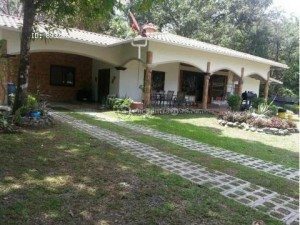
Right-of-possession (ROP) property can be titled, but the process typically takes about 5 years and costs between $6,000 and $100,000. I know some people who have been trying to get their property titled for 10 years with no success. I also know people who lost tens of $1,000s of dollars buying property with the right of possession. And I know people who have purchased property with the right of possession with no problems. If you do buy the right of possession of the property, you still need to get your attorney to review all the documents that the seller has to claim their property ownership. Have your attorney review the survey to verify what you are purchasing. Buyers beware of the right of possession of property.
Not all right-of-possession (ROP) property can be built on. If you plan to build, verify that you can get a building permit before you give anyone any money. If there is a current building on the property, verify that it is legally permitted and can remain.
Do not believe real estate agents who tell you all the paperwork is ready to get an ROP property titled. The paperwork might not be prepared, it’s a lengthy process, and it could cost tens of thousands of dollars to get an ROP property titled. It’s better to buy a titled property or write a contract that states you will buy the ROP property after the seller has the property titled.
If you purchase titled property, you can avoid any issues with right of possession because there is a clear and recorded chain of title.
HOW TO TAKE TITLE
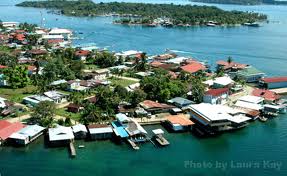
In Panama, it was not customary to take title to a property in one’s own name. Instead, many take title in the name of a corporation or a private interest foundation. There are several reasons this is done, including asset protection and estate planning. If set up correctly, you can avoid the need for probate.
The advantages of taking the title in a corporation changed significantly in November 2021, when Panama passed Law 254, which required corporations to submit extensive annual reports. Besides the yearly renewal fees ($300) for the corporation and the annual registered agent fees (about $150), you’ll need to hire a CPA to file financial records for the corporation. Most CPAs charge between $300 and $500 for this service. Additionally, you’ll need to submit this information to your attorney annually, along with an affidavit and other relevant documents. I recently completed a task that cost $750 and required three hours of my time for a single corporation. Please note that you are required to pay these fees on an annual basis.
You should be aware that taking title in the name of a corporation does not prevent probate; it simply accelerates the process.
Some agents will tell you that you do not have to pay capital gains taxes if you buy the shares of the corporation instead of the real estate. This is not accurate. If the seller does not pay the 5% tax when selling the property, you may be left with the bill later. If you do buy a corporation and the only asset is real estate, it is better to either take the title in your name or set up a new corporation.
There are pros and cons to taking title in a corporation. The biggest “pros” are asset protection and estate planning. The biggest “cons” are the upfront costs associated with setting up a corporation, which can range from $1,000 to $ 1,500, depending on the attorney you are working with. There is also a $300 annual renewal fee to maintain the corporation’s existence, as well as yearly registered agent fees and the cost of annual reporting. If you’re a US citizen, you will have to report the “offshore corporation” to the IRS every year, too. If you take title in your own name, you can avoid these additional costs.
If you take title in the name of a Private Interest Foundation, you can avoid probate. However, you will incur annual renewal fees of $400, registered agent fees, and all the reporting requirements associated with a corporation.
If you take title in the name of a corporation or a private interest foundation, creditors cannot go after your assets. And, if you get sued, they cannot go after any assets held in a corporation or a foundation.
If you take title in your own name, at the very least, you need to have a Panama will to spell out what happens to the property if you die. If you should get sued for any reason, they can go after your property, too.
EASY TO BUY, NOT SO EASY TO SELL
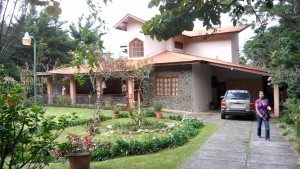
If a property is priced right, it will usually sell within six months. However, because there is no way to determine the right sales price, most properties are not priced correctly. You cannot base your decision on what other people are asking for their property. Generally, houses priced under $300,000 sell faster. Anything priced over $300,000 could take much longer to sell. Properties priced over $500,000 could take many years to sell. Some houses have been on the market and priced too high for more than 5 years – yet the sellers refuse to lower their prices. It’s crazy!
Some sellers attempt to justify their sales price based on replacement cost, but this is not an accurate method for pricing properties in Panama, as building costs vary significantly.
THINGS YOU SHOULD CONSIDER BEFORE BUYING IN PANAMA
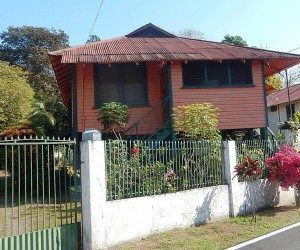
If you have health problems, it’s essential to know the location of the closest medical facility and the estimated time it will take to reach it. It may be better to rent rather than buy.
You must determine the location of the closest grocery store and check if they have the items you need.
If you travel frequently, you’ll want to be near an airport.
You may not be able to get fast internet, any internet, or cable TV service in some areas. Yet other regions have fiber optics, and you can get 100-600mbps internet speed.
You’re not just buying a house, you’re buying a neighborhood, so it’s essential that the surrounding houses are of equal or greater value to yours, or you could have a really hard time selling later.
Always investigate the crime situation in any area you are considering buying in. Most regions of Panama have very low crime rates. However, some areas have experienced an increase in crime. Instead of relying on the expat rumor mill, consult police reports, which are available online for each region.
Since there is no active MLS system in Panama, it is very difficult to determine property values. You should not rely solely on what the real estate salesperson or the seller tells you; instead, you should conduct your own due diligence. It takes time to learn property values, so that’s another reason to wait at least 6-12 months before making a purchase.
FINANCING
Foreigners can get financing from a bank to buy real estate in Panama. You will need to put down 20-30%. All banks will require a life insurance policy for at least the mortgage amount, naming the bank as the beneficiary. The biggest problem is that banks require most loans to be paid off when you turn 70. It could take several months to get financing through a bank.
You can avoid these hassles by buying with seller financing. Some developers offer 5-year seller financing. Many sellers who have been trying to sell their house for a long time will provide seller financing (or you can request it) if you make a down payment of 20-30%. When sellers offer seller financing, you may be able to get 0% interest. I’ve helped many people from our tours buy houses with seller financing.
Note that if you’re buying real estate to qualify for the new Friendly Nations Visa, you must either pay cash or obtain bank financing. Panama will not accept Seller Financing or Developer Financing for this visa.
RENT FIRST!
I highly recommend renting for at least 6-12 months before considering buying anything in Panama. In that time, you can be sure you’ll like the area. You will have time to keep track of the sales price of homes in the area, so you will know the “right” price to pay when you do decide to buy.
During the 6 months that you’re renting, you’ll have the opportunity to meet many people and receive referrals for reputable and honest real estate agents and consultants. You’ll also likely hear about a few salespeople to stay away from. You may hear about a hot deal before it is listed with a real estate agent. If you are moving to Panama, it will take about 6 months to get your permanent Pensionado Visa, which is another reason to wait 6 months to buy.
SAME HOUSE, THREE PRICES
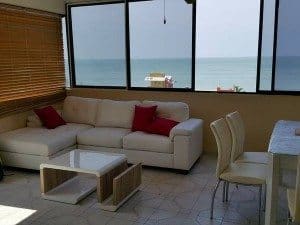
Speaking of listings, many properties you see for sale do not have an exclusive listing with a single agent or company. Instead, the seller has told all the real estate salespeople in town that they will pay a commission to whoever brings a qualified buyer. With this arrangement, you are likely to see the same property at many different prices on many other real estate websites.
If you are from Canada, do not assume you can trust real estate salespeople from Canada. If you are from the USA, do not assume you can trust real estate salespeople from the US. Ditto from Europe, etc.
Panamanians are excellent real estate agents! There are many excellent expat real estate salespeople, but some have a less-than-ideal reputation.
If a real estate salesperson goes to church, claims to be a Christian, and frequents the Panama forums or Panama Facebook groups, it is NOT a sign that they are trustworthy… they could be just trolling for the next sale/commission. Scammers also frequent forums and Facebook… so be careful.
There are many excellent real estate agents and salespeople in Panama. You’ll meet some of them during a Panama Relocation Tour, and we have recommendations for honest real estate companies and agents n our Online Panama Relocation Guide It’s best to get a LOT of recommendations from locals before you start working with anyone to buy or rent real estate.
EXAMPLES OF REAL ESTATE FOR SALE IN PANAMA
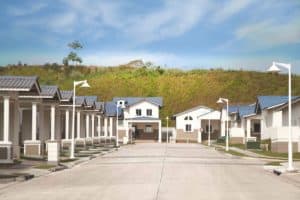
$105,000 Two bedrooms, two bath, gated community next to the Pacific Ocean.Many community amenities including, pools, clubhouse, lake with paddle boats,
BBQ areas, tennis, golf. Only 5 minutes to Westwind Mall and 40 minutes to
Panama City
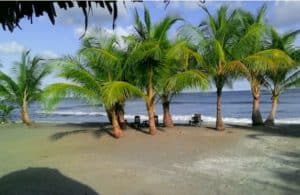
Only $245,000 for an oceanfront house. Three bedroom, three bath fully furnished house on two acres oceanfront just east of David. It also has a casita, which could be rented out for guests. Amazing beach and views. It is fully furnished
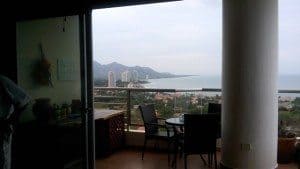
$259,000 Oceanfront condo. Three bedrooms, Two baths, fully furnished. Amazing views and ocean breeze. This is 2 miles to Coronado which has a hospital, many grocery stores, restaurants, and more. And it’s only one hour to Panama City
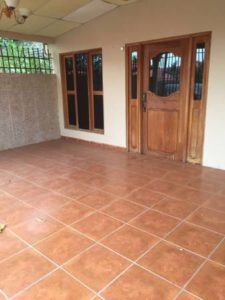
$69,000 in the cultural center of Panama, Las Tablas. Three bedrooms two baths.
Unfurnished. Fenced yard. Great neighborhood
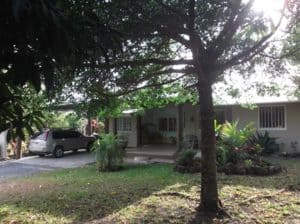
$165,000 fully furnished 3 bedroom 2 bath 2 living area mountain home near Boquete. Great investment property or place to live. Ten minutes to downtown Boquete or 20 minutes to David.
This one SOLD recently!
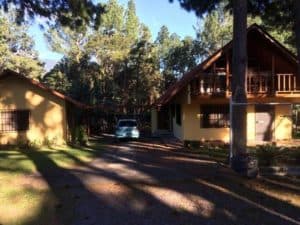
$199,000 for TWO houses. The main house is a two bedroom two bath, fully furnished. There is a one bedroom furnished rental casita next door for instant income. This property is 8 minutes to downtown Boquete.
DON’T LEAVE YOUR BRAINS AT THE BORDER!
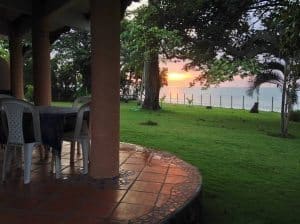
When you see that gorgeous ocean or mountain view and a house priced much less than you’d pay where you live now, don’t get so excited about the opportunity that you forget to do the standard due diligence before buying real estate. Always get the property inspected. Never sign any documents or give anyone any money until your attorney has had a chance to review everything.
One other word of caution – don’t buy real estate, then leave town, trusting someone else to get repairs done or to build your house. You should be present while a house is being built or when repairs are being done.
NOTE: Panama Relocation Tours does not sell real estate. During a tour, we will show you several rental properties to help you get a general idea of what you can expect for your money in different areas and at various price points. We will introduce you to trusted real estate salespeople during the tour.
Panama Relocation Tours does not accept commissions or “kickbacks” for any real estate sales, rentals, or services provided by other recommended service providers.