 Contact
  Log In


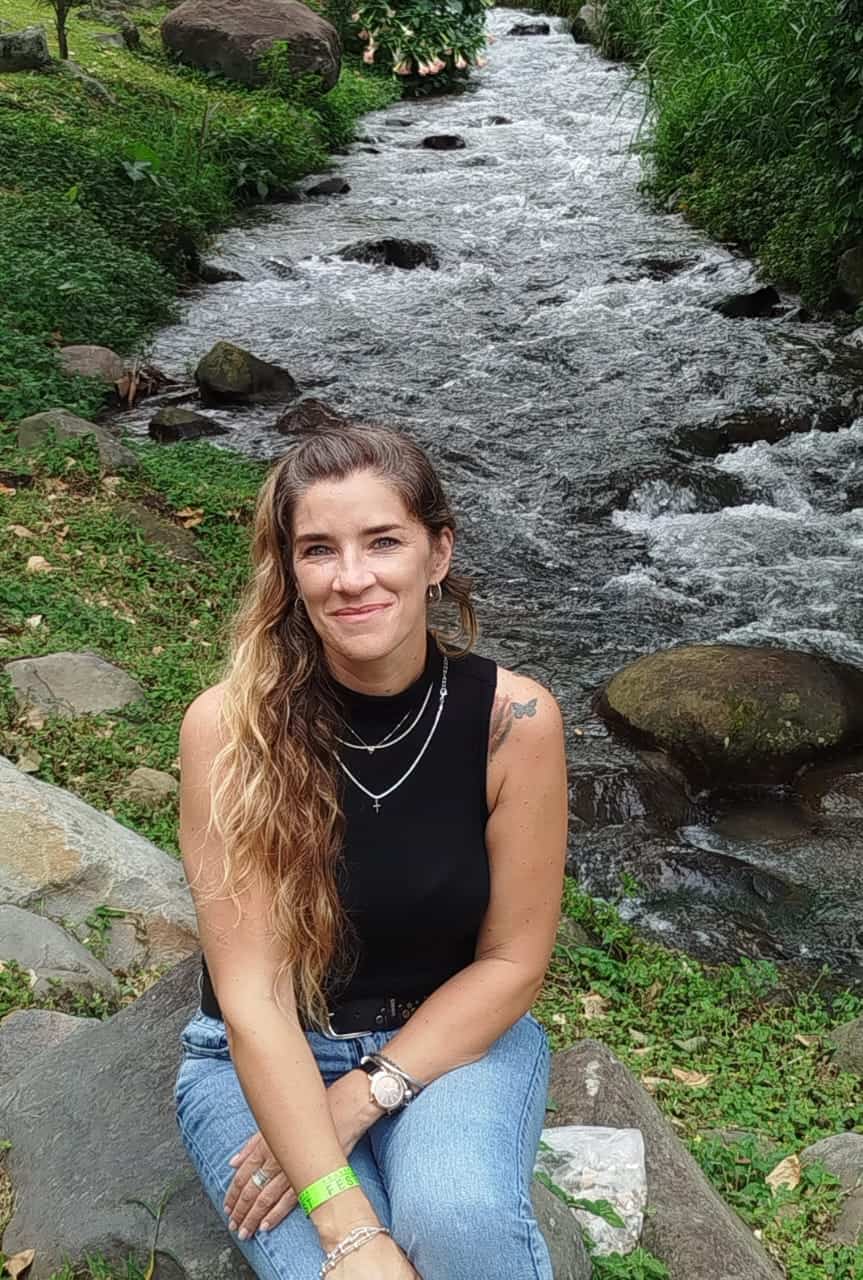
A Personal Journey of Residency, Work, and Culture – by Ailin
Hello, everyone! Thank you so much for being here today. My name is Ailin, I am
originally from Argentina, and I have been living and working in Panama City for the
past thirteen years — almost fourteen now. And I have to say, not a single day has
gone by that I regretted making that move.
Today I want to share my personal experience with you — how I ended up in Panama,
how I got my residency and work permit, what it was really like to find a job as a
foreigner, and what I learned about the culture along the way. My goal is to be very
honest with you, very practical, and to give you a real picture of what this process looks like from someone who has been through it.
I know that some of you are thinking about retiring here, and some of you are still in
your working years and wondering if there are opportunities. I have something to say to both groups, so stay with me.
Part 1: How Panama Happened — And Why
Let me start at the beginning. In 2011, I was twenty-eight at the time, and I was
working at a university in Argentina. There was a professional conference happening in
Panama City, and I traveled there for work. That was my first time in this country.
After the conference ended, I did something that changed my life: I stayed for 3 more
weeks. I rented a car, I went to supermarkets, I walked around neighborhoods, I talked
to people. I started doing my own informal research on the cost of living. And I met
some people at the conference who connected me with a local lawyer who specialized
in residency and immigration. The information she gave me matched everything I was
finding online on my own. That gave me a lot of confidence.
Now, I want to be transparent with you about why I was even looking to move in the first place. At that time, living in Argentina, two things were weighing heavily on me: safety and financial stability. These were real concerns in my daily life, and I knew I wanted to build my future somewhere where those two things were solid.
My original options were Australia and Spain, and Panama was not even on the list.
But once I did the research, Panama kept winning on every level. It was significantly
more affordable than the other options. It was much closer to Argentina geographically.
The economy is dollarized, which means real financial stability. The weather is summer
all year long — which, coming from Argentina, felt like a dream. And the safety was
genuinely impressive. I felt safe here in a way that I had not felt in a long time.
So I went back to Argentina, finished my university career, sold everything I owned, and in 2013 — two years after that conference — I moved to Panama City permanently. I was thirty years old, and I was starting over. And I chose Panama. I did not run away from Argentina. I ran toward Panama. That distinction matters, and I will come back to it.
Part 2: The Residency and Work Permit Process
Now, let’s talk about what many of you are probably most curious about — the legal
side of things. How do you actually get residency and a work permit in Panama?
When I went through this process in 2013, there were three main pathways available.
The first was purchasing a property in Panama, which could qualify you for residency.
That was not my route. The second was if a company was transferring you to Panama
as part of your job, which was also not my situation. The third option was to open your own
company in Panama and work independently through that company. That is the path we took.
I was married at the time — I am divorced now — and we opened a company in
Panama, which focused on importing and repairing industrial machines. That company
was our vehicle for obtaining our residency, our work permits, bank account, and everything that came with it. And we structured everything on a completely separate
basis — each of us had our own permits, our own documentation, our own
independence. That was a very important decision, and I recommend that kind of
independence to anyone going through this process as a family.
The process itself was actually simpler and faster than I expected. Having a good
lawyer and being at the appointments and being aware of all, made a significant
difference. My advice to you: find a reputable immigration lawyer in Panama before you arrive. Do your research, ask for references, and make sure the information they give you is consistent with what you can verify independently. That is exactly what I did, and it worked.
The important thing to know is that Panama genuinely wants to attract people who want to build a life here. The system, while it has its paperwork and its steps, is designed to, be accessible. For retirees, there are specific programs, such as the Pensionado Visa, that offer incredible benefits. For those still working, there are pathways through investment, business, or employment. The landscape may have evolved since my time, so always confirm the current requirements with a local professional.
Part 3: Finding a Job as a Foreigner
Once my paperwork was in order, I made a decision that was very important for me: I
wanted to find a permanent job working for a Panamanian company. Not just to work
through my own company, but to actually be an employee. I had two reasons for this.
The first was practical: I wanted to start building my social security contributions, my
retirement plan, and access to health insurance through the Panamanian system.
These are real, tangible benefits that the country provides to those who are part of the
formal workforce, and I wanted to be part of that system.
The second reason was cultural, and honestly, it turned out to be the most valuable thing I did: I believed that the best way to truly understand a new country is to work inside it.
Not as a visitor, not as a tourist, not from behind a computer screen — but side by side
with the people who were born and raised there.
My first job in Panama was at a logistics company — a strong, established business
with both Panamanian and North American roots, operating in the country for over
twenty-five years. My role was in B2B sales, and I was responsible for managing
accounts and opening new franchise accounts across the country. That meant I was out
in the field, meeting people from all different industries, at all different levels of business, driving all over the country. Panama is a small country, and that turned out to work very much in my favor. Within three years, I had built a network that I still use and value today — thirteen years later.
But I want to be very honest with you about what those first steps actually felt like. I
came from Argentina with ten years of professional experience. I knew my industry.
People knew me. I had references, a reputation, a network. And then I arrived in
Panama, and I had none of that. I was the new one. I was the foreign one. I started on a
basic salary. I had to earn everything from scratch.
No one was unkind to me. No one made me feel unwelcome. But the reality is that
when you move to a new country, your professional reputation does not travel with you.
Your network does not cross the border. And your expertise — while real and valuable
— was built in a different context, for a different culture, within a different set of rules.
You have to be willing to rebuild, and you have to do it with humility.
That humility was one of the best decisions I ever made professionally. I listened more
than I talked. I observed before I acted. And very quickly, I started to understand not just the business landscape, but the people inside it.
Part 4: Understanding the Culture Through Work
This brings me to what I consider the most interesting and most important part of my
experience — the culture.
Even though Panama and Argentina are both Latin American countries and we share
the Spanish language, the cultures are genuinely very different. And those differences
caught me off guard at first.
Panama has a Caribbean influence that makes the culture warm, soft, and deeply
relational. People here pay close attention to how you speak to them, how you look at
them, how you make them feel. Connection comes before transaction. Relationship
comes before result. In Argentina, we tend to be more direct — some would say more
rough. We come from strong Italian, German and Spanish cultural roots, and our
communication style reflects that. We are results-driven. We are competitive. We push
hard.
In Panama, that approach can land the wrong way. It is not that Panamanians do not
care about results — they absolutely do. But they need to trust you first. They need to
feel that you see them as a person, not just as a function. And once you have that trust,
doors open in ways that pure performance never could.
There is also a language barrier that surprised me. We both speak Spanish, but the
vocabulary is not always the same. There are words that mean completely different
things. Even the tone! There are expressions that are unique to each country. I had
moments that were awkward, moments that were funny, and moments that were
genuinely confusing. I took it all as a lesson and kept learning.
What I will tell you is this: working inside a Panamanian company, sitting with
Panamanian colleagues, eating the same food at lunch, listening to their music, learning, the rhythm of how work gets done here — there is no faster, deeper way to understand a culture. School is great. Books are helpful. But work is where culture lives.
Watch this interview with Ailin discussing her journey from Argentina to Panama

Part 5: What I Wish I Had Known
If I could go back and give myself advice before I moved, here is what I would say. And
I think this advice applies equally to everyone in this room.
First: people in Panama care more about who you are than what you know. Coming
from a very competitive professional environment, I was very focused on demonstrating my expertise and delivering results. And while that is important, it is not what opens doors here first. Here, people want to know you as a human being. They want to feel comfortable with you. They want to like you. Once that foundation is in place, your credentials and results will speak for themselves. Lead with the person, not the resume.
Second: do not come here expecting to find the things you had back home. Panama is
its own country. It does not look like the United States. It does not look like Argentina. It does not look like Canada. And that is not a flaw — that is the beauty of it. Panama has a rich, layered culture that is entirely its own, and if you arrive with open eyes and an open mind, you will find things here that you never knew you were missing. But if you spend your time comparing everything to where you came from, you will rob yourself of the experience of actually being here.
Third — and this is perhaps the most important thing I will say today: make the decision to come to Panama, not just the decision to leave somewhere else. There is a big difference between running away from a place and choosing to be somewhere. I chose Panama. I had other options — the United States, Australia, Spain — but Panama was the place that genuinely met my most important needs. That intentionality made all the difference in how I arrived, how I adapted, and how I built my life here.
When you choose a place on purpose, you show up ready. You show up open. You do
not spend your first year grieving everything you left behind. You spend it discovering
everything that is in front of you. And that is the mindset that makes this transition not
just manageable, but genuinely exciting.
In Closing:
We are creatures of habit. All of us. We find comfort in the familiar, in the routines we
have built, in the people and places we already know. Moving to a new country disrupts all of that. And yes, there will be moments of discomfort. There will be days when you miss home. There will be things that are harder than you expected.
But I promise you this: if you arrive with the willingness to learn, to taste new flavors, to listen more than you speak, and to absolutely refuse to measure everything against
what you left behind, the discomfort will pass faster than you think. And what will
replace it is a sense of belonging that you built yourself, from scratch, in a place you
chose on purpose.
Panama gave me safety, stability, a career, a network, and a life that I am proud of.
Thirteen years later, I am still here. And I am still learning.
I hope my story gives you something useful to take with you as you make your own
decision. I am happy to answer any questions you have — the more specific, the better.
Thank you so much for listening.
— Ailin —